

Keynote Presentation The Importance of Context in Teaching Numeracy (and Maths)Dave TOUT This presentation will look at why real-world contexts are critical for teaching numeracy and mathematics. There are numerous reasons why this make sense, and there are a number of models and research about this relationship between the real-world and the maths world, and about this skill we call numeracy. We know contexts can help engage learners and provide the purpose for learning about how to use and apply maths in the real world, but there are also reasons why starting with a context can assist in the successful teaching and learning of numeracy and mathematics. The presentation will explore and share this issue and how this can work in practice, both in your planning and in your teaching. | 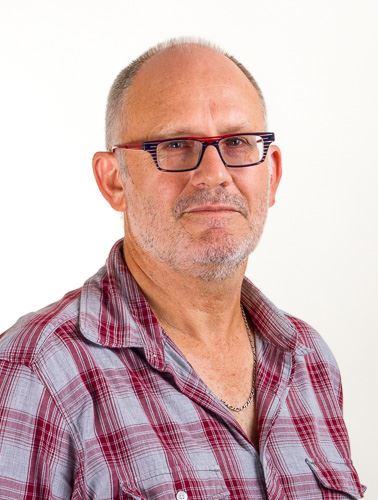 |
Dave is an adult and youth numeracy educator who is particularly interested in making mathematics relevant, interesting and fun for all students, and is recognised as one of Australia's leading numeracy personnel with over 50 years' experience working across schools, TAFEs, community providers, universities, national education bodies and workplaces. He has worked at a state, national and international level in research, curriculum, assessment and professional development. Dave has written many numeracy and maths curriculum, teaching and PD resources, and is an author of the ACSF. Dave has also been involved in international numeracy assessments including the OECD's PIAAC and PISA programs.
Session 1: The 2025 Launch of Building Strength with Numeracy Resource Debbie Soccio and VALBEC In 2025, the Adult Community and Further Education (ACFE) Board recognised the significance of nearly two decades since the re-publication of Australia’s iconic numeracy resources. Through the support of VALBEC, the latest edition, Building Strength with Numeracy, revises and enhances previous resources including Building Strength in Numeracy, Strength in Numbers, and Breaking the Maths Barrier, alongside other proven teaching materials developed by Beth Marr and experienced numeracy educators. In this session, we will celebrate the launch of the enduring impact of these resources and their renewed relevance for educators and learners in 2025 and beyond. |

With more than 35 years of experience in the training and education sector, Debbie has worked across schools, post-secondary institutions, universities, and industry, with a particular focus on adult literacy and education. She has collaborated extensively with government organisations through project work and as a participant in VALBEC and ACAL. Her professional background includes sessional academic lecturing, managing and delivering LLND within TAFE, VCAL and Pre-VCAL programmes. teaching expertise spans foundation language, literacy, and numeracy skills, as well as contributing to the development and revision of key resources such as ACSF documents, CGEA reaccreditations, VCAL, and other adult literacy materials. In addition to her teaching and curriculum work, she have extensive experience in educational design, including developing and delivering learning solutions for Victoria Police and eWorks.
For the past six years, Debbie has been teaching in a primary school classroom in a low-socioeconomic area of Melbourne. As part of the school implementation team, she was focused on a guided, structured inquiry approach to mathematics, using a cyclical model—Launch, Explore, Discuss, Summarise—that actively engages students and allows concepts to be revisited and deepened over time.
Session 3: Building Strength with Numeracy – Further Ruth Patterson The use of the resource Building Strength with Numeracy is ideal for the neighbourhood houses, EAL classes and basic CGEA classes. Additionally in trades and higher VET classes, there are activities and examples which can kick start the Maths thinking. But what about the variation in skill levels in our classes? This presentation will look at the need for extending students with additional resources. It will look at “Just in Time” numeracy teaching in different courses, addressing individual student’s needs, and encouraging them to look things up, explore and retain what they have learnt. It will also touch on the need for us as educators to share our love of maths with our colleagues. |
|

Originally trained as an industrial chemist, Ruth moved to teaching Numeracy at VU Footscray, in 2005. Her teaching at TAFE, included eight years in prison education with Kangan TAFE. She now works in learning Support with Melbourne Polytechnic. She is an avid swimmer and Life Saver and has three adult sons.
Workshop One: Assessing…. Numeracy…Where Do I Start? Lindee Conway Lindee will start at the absolute beginning of thinking about assessing adults’ numeracy skills, using the PQF+ levels and with an attitude that is inclusive and respectful, to learners and educators in Learn Locals. There will also be a little bit of the ACSF, but only the bits that help with great numeracy ideas. And, as always, there’ll be some fun. You will get practical ideas and a better understanding of how important your judgement and intuition are in the process. |

Lindee has worked in migrant education, literacy and numeracy for many years. Post TAFE- retirement she has returned to working with Learn Local educators. She now helps with assessment and loves discussions about teaching and what helps learners to learn. She is highly skilled in advising on assessments for adult learners to improve their LLNDE skills.
Workshop Two: Exploring Online Numeracy Resources and Hands-On Ideas Pam Mahlis Join us for an engaging, practical session all about bringing numeracy to life with online resources! Discover a wide range of free and interactive tools that can help you strengthen your students’ number skills and mathematical thinking. This workshop will be packed with hands-on activities, creative ideas, and ready-to-use resources you can take straight into your classroom. Whether you’re looking to support diverse learners, add variety to your lessons, or make numeracy more fun and accessible, this session will equip you with strategies to enhance numeracy learning through the power of digital tools. |
|

Pam is a dedicated and experienced numeracy educator with a strong background in both secondary and adult education. Beginning her career as a mathematics teacher in the secondary school system, she developed a deep understanding of how to engage learners of all abilities and foster confidence in numeracy.
Building on this foundation, Pam transitioned into adult education, where she has continued to make a significant impact by supporting adults to develop essential numeracy skills for work, study, and everyday life. Her teaching approach is grounded in creating inclusive, supportive, and practical learning environments that empower learners to achieve their goals.
Currently, Pam continues to work in the Literacy and Numeracy (LN) space, contributing to resource development, and innovative approaches to adult numeracy education. With a commitment to lifelong learning and educational equity, Pam is dedicated in helping all learners build the skills and confidence they need to succeed.
Workshop Three: A Rewarding Volunteering Experience in Adult Numeracy Bridget Horton I will be sharing a personal experience of volunteering at the Yarraville Community Centre. I worked with two adults seeking numeracy support through the Reading and Writing Hotline. The relationships that we developed were genuine and collaborative, regularly celebrating our wins in both confidence and maths understanding. The sequences I will share are progressive examples of instructional material that prioritise the factors of Cognitive Load Theory, in particular, the importance of considering prior knowledge and limits for new information. I am currently implementing these in primary school settings. A notable observation from this is the highly complex and unique prior knowledge an adult learner has in comparison to a young learner with little prior knowledge, adding to the complexity of delivering the right material at the right time. |
|

Bridget is a maths teacher, currently working in a Victorian primary school. She is the owner of The Y Intercept, a numeracy business developing frameworks that incorporate cognitive science principles and confidence building approaches. She has worked and volunteered for many years with organisations such as MacKillop Family Services, Ardoch Youth Foundation, Yarraville Community Centre and other specialised services for neurodiverse and dyscalculic clientele. Bridget has lectured mathematics subjects for the Bachelor of Primary Education and has recently started exploring research avenues to gather data on the sequences she uses.
Session 5: Learn Local Industry Practice Networks Olivia Hurrell & Lauren Rizzacasa The Learn Local Industry Practice Networks (IPNs) are a statewide initiative established by the ACFE Board in 2023 to strengthen collaboration between Victorian Learn Local providers and industry. Developed in response to the Victorian Government’s Ministerial Statement on the Future of Adult Community Education 2020–2025, the IPNs aim to build industry partnerships that enhance pre-accredited training, address workforce foundation skills needs, and improve employment outcomes for learners. The IPNs bring together Learn Local providers across three key sectors—Care and Support; Building, Civil Construction and Landscaping; and Retail, Hospitality and Warehousing—to extend good practice in industry engagement. Through shared learning and collaboration, providers build their capacity to work effectively with employers, co-design training that meets entry-level workforce needs, and increase employer understanding of the value of pre-accredited training. The Learn Local Industry Practice Networks presentation will provide an overview of how the IPNs operate, the resources and supports available to participating providers, and examples of successful industry partnerships. Case studies will illustrate how contextualised literacy and numeracy tasks are integrated into industry-specific training. While co-design is a key element, the broader focus of the IPNs is on building sustainable partnerships that connect learners, training, and employment pathways. |
|


Olivia Hurrell (BA/BEd, GCertTESOL, MEd) is a passionate educator with 20 years of experience across diverse learning environments, including primary schools, VCE, TAFE, AMES Australia, and Learn Local centres. Inspired by cross-cultural experiences, she pursued TESOL and completed a Master of Education research project on Sudanese adult learners and resettlement. Olivia has worked as a settlement support worker and coordinated the Adult Migrant English Program at a regional TAFE. Now at Bass Coast Adult Learning, she contributes in various roles. As Care and Support Industry Practice Network Coordinator, she collaborates across Victoria to support adult learners and improve educational outcomes.
Lauren Rizzacasa (BA, MA, PhD) is the Coordinator of the Building, Civil Construction and Landscaping Industry Practice Network. Based at Prace, a Learn Local provider in northern metropolitan Melbourne, Lauren brings over 30 years of experience across the tertiary and community education sectors. Lauren has extensive expertise in program coordination, stakeholder engagement, and educational delivery within not-for-profit settings. Holding a PhD in Slavic Languages and Literatures, Lauren also has a strong background in LOTE (Languages Other Than English) teaching. In addition to her coordination role, she leads Prace’s marketing team, driving community-focused initiatives and promoting lifelong learning opportunities.
Session 6: Designing Contextual Tools and Goals to Support Adult Numeracy: A Practitioner Workshop Dr Lorraine Gaunt Adult numeracy is essential for everyday life, influencing employment, health, and social participation. Yet, many adults face persistent challenges in developing these skills, and research in adult numeracy remains underdeveloped compared to literacy. This interactive workshop, part of the Numeracy Showcase, focuses on the critical role of context in designing effective numeracy tools and goals. Participants will explore how real-life scenarios shape learning goals and strategies, and collaboratively create practical resources tailored to diverse adult learners. Through hands-on activities and shared insights, educators will leave with actionable approaches to embed numeracy in meaningful contexts, enhancing learner engagement and success. This session offers a unique opportunity to connect theory with practice and strengthen professional networks in adult numeracy education. |

Dr Lorraine Gaunt is a Lecturer in Education and Course Director for the Master of Teaching (secondary) course in the School of Education at Charles Sturt University. Lorraine completed her PhD at the University of Queensland in 2020 on the topic of supporting numeracy for adults with intellectual disability. Lorraine has over 25 years’ experience as a Secondary Mathematics, Special Education teacher and Head of Special Education Services at a range of Queensland secondary schools. She has 15 years’ experience working in the tertiary education sector in the field of mathematics education and Inclusive education. Lorraine’s research interests include supporting numeracy development and promoting inclusive mathematics, supporting the professional learning of teachers and preservice teachers, and promoting inclusive communities. Lorraine was awarded the Early Career Award for her research paper and presentation at the 2022 Mathematics Education Research Group of Australasia (MERGA) conference in Tasmania.
Session Seven: Building Strength with Numeracy in Action Everywhere! Christine Tully and the VALBEC Team This session is a workshop in which participants will get the opportunity to engage with some of the games in the Building Strength in Number Resource. Participants will be able to interact with the resources and explore how these games may be used with their students. This will be a fun filled session to end a very exciting day. |
|

Chris Tully has worked in the Adult Education field for 35 years across a range of areas, teaching numeracy. Prior to this, she worked as a Mathematics teacher in the secondary system. Over the last 13 years she has worked in the Literacy and Numeracy support area, coordinating literacy and numeracy support to a variety of VET programs. She also has contributed to the Australian Core Skills Framework as an expert commentator. She has been involved in the accreditation and re-accreditation of various curriculum and training packages including the Certificates in General Education for Adults. She was part of the original group that reviewed the resource "Building Strength in Numbers" led by the creator Beth Marr and has been involved in the updating of the resource.