

Download the Conference Booklet |
Download the Conference Program |


----------------------------------------------------------------------------------------------------------------------------------------------
Conference Opening
Mr John Maddock AM
ACFE Board Chairperson
Auditorium
.jpg) John has extensive governance and senior executive leadership experience in the tertiary and adult education sectors, including as Chief Executive Officer of Box Hill Institute, the Gordon Institute of TAFE and the CAE. His governance experience as a non-executive director in the education sector includes the Victorian Curriculum and Assessment Authority Board, Victorian Tertiary Admissions Centre (VTAC) Board of Trustees, Deakin University Council, Monash University Faculty of Education Board, Innovation and Business Skills Australia, Australian Training Products and eCoach boards.John is a Fellow of the Australian Institute of Company Directors and a member of the Victoria Polytechnic Vice Chancellor’s Advisory Committee at Victoria University.
John has extensive governance and senior executive leadership experience in the tertiary and adult education sectors, including as Chief Executive Officer of Box Hill Institute, the Gordon Institute of TAFE and the CAE. His governance experience as a non-executive director in the education sector includes the Victorian Curriculum and Assessment Authority Board, Victorian Tertiary Admissions Centre (VTAC) Board of Trustees, Deakin University Council, Monash University Faculty of Education Board, Innovation and Business Skills Australia, Australian Training Products and eCoach boards.John is a Fellow of the Australian Institute of Company Directors and a member of the Victoria Polytechnic Vice Chancellor’s Advisory Committee at Victoria University.
He was awarded the Australian Sports Medal for volunteer services at the Sydney 2000 Olympics. In 2013, John was made a Member of the General Division of the Order of Australia for significant service to vocational education and training, and to the sport of basketball.
----------------------------------------------------------------------------------------------------------------------------------------------
 Keynote Presentation
How do you spell potential?
Jo Medlin,
Auditorium
In 1953 UNESCO asked countries around the world to report their adult literacy levels. Australia responded that literacy issues in Australia were ‘confined to an irreducible minimum, composed mainly of the mentally incapable’ (UNESCO 1953). Move to 2025 and a group of educators spent weeks debating the most appropriate way to describe adults with unmet literacy needs and eventually settled on the term potential learner, explaining the term 'situates these adults as potential future learners" ... to 'focus on policy interventions to address systemic issues and remove barriers, rather than situating overcoming barriers as an individual responsibility'.The words we use have changed since that report in 1953 and they tell us something about our roles, our learners, and what we need and want as a field. In this presentation, inspired by the 50th anniversary of ACAL, Jo explores the current status of adult literacy and its future through the lens of language and key figures and events in Australian literacy. The presentation covers current activity under the national strategy, upcoming changes, and potential opportunities.
Jo is a literacy and numeracy teacher and advocate and current president of the Australian Council for Adult Literacy (ACAL). She volunteers on the Reading Writing Hotline Steering Committee and the JSA Foundation Skills Study Steering Committee. Employed part-time as an Associate Lecturer in Adult Vocational Education at CSU, she coordinates and lectures on a range of teacher -training adult LLN subjects. Research, consultation and resource development fill in the rest of the working week. Between literacy advocacy Jo walks the dog, contemplates jobs in the garden, and dreams of being an archaeologist. As a prolific reader (mainly cosy detective stories) she firmly believes a book a day keeps reality away.
Download Presentation
----------------------------------------------------------------------------------------------------------------------------------------------
Launch of Building Strength with Numeracy Resource VALBEC Auditorium In 2025, the Adult Community and Further Education (ACFE) Board recognised the significance of nearly two decades since the re-publication of Australia’s iconic numeracy resources. Through the support of VALBEC, the latest edition, Building Strength with Numeracy, revises and enhances previous resources including Building Strength in Numeracy, Strength in Numbers, and Breaking the Maths Barrier, alongside other proven teaching materials developed by Beth Marr and experienced numeracy educators. In this session, we will celebrate the launch of the enduring impact of these resources and their renewed relevance for educators and learners in 2026 and beyond. |
|

Beyond the worksheet: Promoting language, discussion and understanding in Adult Numeracy classes Beth Marr Conference Theme(s): Embed adult learning principles across time Innovate with purpose Workshop Type: Practical Workshop Session 2: 12:00 - 12:45, Level 2, Room A2.26 Workshop Summary This practical, interactive session will look at several adult numeracy activity structures. Designed to encourage learners to use and understand numeracy language and its meanings, activities will cover a range of aspects including number, measurement and space and shape. The examples used will be taken from the VALBEC online numeracy resource 'Building Strength with Numeracy', however discussion will also look at how these structures can be adapted to suit the needs of different students and particular vocational contexts. |
Beth Marr |

Beth has spent many decades working in Adult Numeracy. As a teacher, program designer/coordinator, resource developer, professional development leader and researcher. She was the coordinator and lead writer of many popular Australian Adult Numeracy resources, such as Mathematics: A New Beginning; Strength in Numbers; Breaking the Maths Barrier and Numeracy on the line.
The most popular activities and practice exercises from these resources were combined and updated to create the VALBEC resource, Building Strength with Numeracy.
----------------------------------------------------------------------------------------------------------------------------------------------
Cyber Security for Adult Learners Jason Spear, Adult Learning Australia Conference Theme(s): Learn from where we’ve come from Innovate with purpose Workshop Type: Presentation Session 1, 11:10 - 11:55, Level 5, Room 5.27 |
Jason Spear |

Workshop Summary
Reflecting on the "Password Battle": Shifting Strategies in Adult Digital Literacy. In 2017, teaching technology to seniors was often about showing them how things worked. Today, it is about teaching them how to survive a digital world that can feel overwhelming. This session reflects on the shift from basic tech skills to building digital resilience. Key presentation takeaways:
- Introducing ALA’s online cyber security training
- The “confidence-first” model: moving away from technical checklists to reduce fear of “breaking the internet”
- Memory anchoring: connecting digital security habits to learners’ prior knowledge and routines
- Simplifying the complex: explaining two-factor authentication and scam detection in plain English
- Reflecting on the “Password Battle”: shifting strategies in adult digital literacy.
Jason has worked in the Learn Local sector for several years, specialising in digital literacy training for adult learners. He has a passion for digital inclusion and is currently working across inner west communities in Melbourne supporting adult learners to engage and be safe online.
Jason is currently doing contract work to support a cyber security project for Adult Learning Australia who because of his expertise have commissioned Jason to present at VALBEC.
----------------------------------------------------------------------------------------------------------------------------------------------
Lighting Up Learning: Transformative Enquiry-Based Learning in Corrections Catherine Gatt and Belinda Postill, Corrections, Bendigo Kangan Institute Conference Theme(s): Innovate with purpose Reimagine practice for changing learners and contexts Workshop Type: Presentation Session 1, 11:10 - 11:55 , Level 5, Room 5.33 Workshop Summary Catherine and Belinda will talk about the value of enquiry- & project-based learning journeys in Corrections Education settings, exploring how it can hold trauma-informed practices for a diverse cohort, and be a powerfully transformative experience that allows students to reinvent their identities as learners and build a growth-mindset for the future. They will talk about breathing space into CGEA & Mumgu-dhal units, with practical examples for teachers. Their goal is to make visible to teachers how their passion and tiny choices combine to transform the learning experience for students. |  Catherine Gatt
Belinda Postill |

Belinda Postill and Catherine Gatt share extensive experience in Corrections Education, exploring enquiry‐and project‐based learning as trauma‐informed, transformative practice for diverse learners. Their session highlights how a project-based approach in CGEA, FSK and Mumgu‐dhal units can support identity‐building and growth mindsets, with practical classroom examples.
Catherine brings over 20 years’ teaching experience, including STEM curriculum design and current CGEA/FSK delivery in Corrections.
Belinda has 30+ years in VET/ Adult literacy/ First Nations Education across Victoria and the NT, including 6 years in Corrections, and is passionate about dignified, relationship‐cantered learning.
----------------------------------------------------------------------------------------------------------------------------------------------
Strengthening VET accredited pathways in Learn Locals: what can the Skills First LND Support Program offer? Nadia Casarotto and Chris Tully, Victoria University and Melbourne Polytechnic Conference Theme: Reimagine practice for changing learners and contexts Workshop Type: Practical Workshop Session 1, 11:10 - 11:55, Level 5, Room 5.26 Workshop Summary In 2026, Learn Locals have been invited to participate in the Skills First LND Support Program. This session has two parts. Part 1 will introduce Learn Local practitioners and other interested providers to the purpose, structure and benefits of the Skills First LND Support Program for learners of VET programs in Learn Local contexts. It will assist providers to interpret current Victorian Government guidance in introducing LND support within Learn Local settings for diverse learner cohorts. Part 2 provides practical examples of how sample units from the CGEA can be used to strengthen LND in Skills First VET Programs. It will examine considerations in selecting appropriate VET units for support, work through a simple process for identifying foundation skills demands in a VET unit or task and consider factors in selecting appropriate CGEA units for support. Participants will be asked to apply the process to unpack a VET unit. |
Nadia Casarotto
Chris Tully |


Nadia was a member of the Service Industries CMM team and is now the Curriculum Maintenance Manager – ACFE, leading the ongoing review and development of adult education curricula, including the Certificates in General Education for Adults (CGEA). She works closely with educators and sector partners to ensure programs remain relevant, inclusive and responsive to adult learner needs.
Christine is the Learning Skills Program Coordinator at Melbourne Polytechnic, leading literacy and numeracy support across a wide range of VET programs. She is recognised for her expertise in embedded learning support and team‐teaching models that improve student outcomes.
----------------------------------------------------------------------------------------------------------------------------------------------
Past Literacy, Future Literacy/AI Rob McCormack Conference Theme(s): Embed adult learning principles across time Learn from where we’ve come from Innovate with purpose Reimagine practice for changing learners and contexts Workshop Type: Presentation Session 2, 12:00 - 12:45, Level 5, Room 5.27 |
Rob McCormack |

Workshop Summary
This session begins with a brief description of the history of Adult Literacy/Adult Basic Education from 1980s-2015. It then outlines the increasing capture of ABE by the skills-based 'competency' regime of VET.
It will then pivot to sketch the trajectory of Bill Cope & Mary Kalantzis's journey into 'cyber-social' education in which human and AI both contribute as educator, trainer, coach, give feedback, critique, mentor, formative assessor across both human educators and AI agents.
The session will conclude by opening up time for discussion around AI and Literacy pedagogy.
Rob is a retired Independent Academic who has spent many years, decades even, thinking about and exploring pedagogies of 'Second Chance Education' (LLND). He has worked across Schools, TAFE, the Community Sector and Higher Education.
Inner Development in 21st Century Education John Blake, Eastern College Australia Conference Theme(s): Embed adult learning principles across time Learn from where we’ve come from Reimagine practice for changing learners and contexts Session 2, 12:00 - 12:45, Level 5, Room 5.26 |
John Blake |

Workshop Summary
The Sustainable Development Goals (SDGs) and Inner Development Goals (IDGs) provide powerful, practical frameworks to inspire future thinking and youth engagement towards personal transformation.
While the SDGs set important global directions calling for decent work, climate action, gender equality, quality education, amongst others, the Inner Development Goals focus on the human capabilities required to achieve them: self-awareness, critical thinking, collaboration, and resilience. In a rapidly evolving sector aiming for progress, these inner skills are not optional; they are essential.
By integrating SDGs and IDGs into our teaching strategies, educators can assist in building a future-ready growth mindset that empowers women and youth and develops an inclusive culture to encourage learners as they venture into their new lives and next steps.
John has more than 35 years of industry experience and Training & Education, including English as an Additional Language in three countries.
Having worked in 22 countries and hundreds of teams and organisations, John is passionate about the opportunity to inspire participants to excel and encourage their own trajectory in contributing to the future workforce.
----------------------------------------------------------------------------------------------------------------------------------------------
Power skills - a vital skill set for becoming work ready Anne Vize, Writer Conference Theme(s): Innovate with purpose Session 2, 12:00 - 12:45, Level 5, Room A5.33 |
Anne Vize |

Workshop Summary
Many teens and young people focus on technical and hands-on skills and sometimes forget how important it is to develop the skills that help them find, keep and thrive at work. This important set of skills is known as employability or power skills. They include communication, teamwork, problem-solving, creativity, innovation, leadership and emotional intelligence. In this practical workshop we will learn about each of the power skills, then work together to plan engaging ways of incorporating them into classroom learning experiences.
We will discover how power skills can become an area of strength, particularly for neurodiverse learners, and we will focus on how to build these skills for learners who do best with strong support.
Anne is an educational writer and teacher. She has worked with children and young people who learn in different and unique ways for many years. She is the author of books including The A to Z of Specialist and Inclusive Education and the Skills for Work series.
Anne has developed many vocational learner guides for teens and young adults completing courses including transition and work education and general education certificates.
----------------------------------------------------------------------------------------------------------------------------------------------
Numeracy Made Easy: Visual, Practical, and Adaptive Methods Jayesh Chauhan, Chisholm Institute Conference Theme(s): Innovate with purpose Reimagine practice for changing learners and contexts Session 1, 11:10 - 11:55, Level 2, Room A2.26 |
Jayesh Chauhan |

Workshop Summary
In this session, participants will explore practical numeracy methods tailored for plumbing and trade learning. The session demonstrates how different teaching approaches and visual tools can keep learners engaged and help them grasp key concepts more effectively.
Through real plumbing examples and varied teaching ideas, participants will see how numeracy can be taught creatively and confidently. They will experiment with drawing tools, formulas, and visual strategies, compare different methods, and discover how visual thinking strengthens problem-solving.
The goal is to inspire “out-of-the-box” teaching and equip educators with adaptable techniques they can use immediately.
Jayesh works as a Numeracy teacher at Chisholm and really enjoys teaching Numeracy to plumbing students. Although some topics can be challenging because students learn in different ways, it makes the work more exciting and encourages exploring new techniques, methods, and approaches. Jayesh has over twenty years of experience teaching Physics and Mathematics across secondary, senior secondary, and higher‐education levels in India and Australia.
As a Physics Unit Convener, he contributed to curriculum design and academic coordination while teaching Electromagnetism, Fibre Optics, Electronics, and Higher‐Education Mathematics.
Jayesh works as a Numeracy teacher at Chisholm TAFE and really enjoys teaching Numeracy to plumbing students. Although some topics can be challenging because students learn in different ways, it makes the work more exciting and encourages exploring new techniques, methods, and approaches.
----------------------------------------------------------------------------------------------------------------------------------------------
Revisiting Literacy Teaching in a Digital Age: Integrating Digital Skills into Adult Literacy Practice Ngoc Nhan (Peter) Trinh, AMES Australia Conference Theme(s): Innovate with purpose Reimagine practice for changing learners and contexts Session 3, 1:55 - 2:35, Level 5, Room 5.27 | Ngoc Nhan (Peter) Trinh |
%20Trinh.jpeg "Ngoc Nhan (Peter) Trinh")
Workshop Summary
Adult literacy learners increasingly encounter literacy demands through digital platforms, yet digital skills are often taught as optional or separate from literacy instruction.
Thus, this presentation presents a learner-centred teaching model that integrates digital skills directly into adult literacy practice. Developed within adult learners in pre-accredited programs, the model draws on adult learning principles, scaffolding, and functional literacy to support confidence, independence, and engagement.
Literacy learning occurs through meaningful digital tasks such as searching for information, completing forms, and communicating with services, using learners’ own devices in real contexts. The model reflects on the limitations of traditional approaches and proposes an integrated framework responsive to changing social and digital environments. Practical teaching strategies, challenges in implementation, and observed impacts on learner confidence, participation, and pathways to further study are shared.
Peter has developed a strong passion for education through inclusive, practical, and well‐structured training. He thrives on creating learner‐centred environments, supporting teachers with clear and detailed facilitation guides, and fostering meaningful community engagement.
His approach blends creativity, structure, and empathy, ensuring learners feel seen, supported, and confident throughout their learning journey.
----------------------------------------------------------------------------------------------------------------------------------------------
Reaching the learners we never meet
Lindy Cassidy, Vanessa Iles, Reading Writing Hotline
Jo Medlin
Conference Theme(s): Learn from where we’ve come from
Innovate with purpose
Reimagine practice for changing learners and contexts
Session 3, 1:55 - 2:35, Level 2, Room A2.26
 .
. 
Lindy Cassidy Vanessa Iles Jo Medlin
Workshop Summary
Building on the Reading Writing Hotline’s earlier Literature Review this interactive workshop explores further insights from teachers and students on how to engage potential literacy learners.
The workshop will summarise the key findings from the Hotline research. Be inspired by stories from practitioners on how they are reaching out into the community, using place-based approaches and collaborations to more effectively engage people who don’t usually present to educational institutions.
Hear suggestions from students around what makes programs worthwhile and how to develop safe and supportive learning spaces. Participants will then share their own examples and issues around practical strategies to engage potential literacy learners and discuss factors that enabled successful engagement.
Jo advocates for adult literacy, plain language and lifelong learning. Jo was commissioned by the Hotline to research approaches to engage potential learners. She spoke to teachers and learners across the country and looks forward to sharing the information as part of this project.
Vanessa is manager of the national Reading Writing Hotline, and an experienced language, literacy and numeracy teacher. Vanessa is committed to optimising opportunities for adult learners by improving connections between learners, education providers and employers.
Lindy is the Community Engagement Coordinator at the Reading Writing Hotline and has extensive experience in outreach education.
----------------------------------------------------------------------------------------------------------------------------------------------
Leap into Literacy - a collaborative approach Lizzie James (Your Library) and Janet Claringbold (Mountain District Learning Centre)
Conference Theme(s): Innovate with purpose Reimagine practice for changing learners and contexts
Session 3, 1:55 - 2:35, Level 5, Room A5.33 |  Lizzie James |
Workshop Summary
Leap into Literacy is a collaborative response to the need for extra support for those adults with literacy gaps. Your Library (a public library organisation) and Mountain District Learning Centre (a community house) were both committed to supporting those in the community who wanted to improve their literacy but couldn't do it alone. In 2022 Leap into Literacy was born!
Lizzie and Janet will share their journey from research to implementation, the hurdles and even a few success stories and inspire you to collaborate with another organisation in your community to fight the literacy crisis.
Lizzie James is the regional literacy officer for Your Library Limited, an organisation that provides the public library services for 14 libraries across Melbourne outer east. With a background in primary teaching, Lizzie stepped into the newly created role in 2021 with a primary focus on adult literacy and engaging those with literacy gaps with their public library. Lizzie has developed a number of programs to support adults and worked in collaboration with Mountain District Learning centre to create "Leap into Literacy" a volunteer 1:1 adult literacy tutoring program.
Janet has been the CEO at Mountain District Learning Centre (MDLC), a Neighbourhood House and Community Learning Centre located in Ferntree Gully, for 15 years. She holds qualifications in both Community Development and Community Organisational Management. The strong community development focus at MDLC supports the creation of innovative learning solutions for people who are disengaged or marginalised from educational opportunities.
----------------------------------------------------------------------------------------------------------------------------------------------
Transform our Practice with Songs and Stories Sharon Duff and Carmel Davies, Urban Lyrebirds Conference Theme(s): Innovate with purpose Reimagine practice for changing learners and contexts
Session 3, 1:55 - 2:35, Level 5, Room A5.26 |
Carmel Davies and Sharon Duff |

Workshop Summary
Wanting to energise and enrich student learning? Emerging research shows that using creative and engaging activities in the classroom will develop your students’ literacy, assist them to speak with confidence and retain new language structures.
Using songs and stories teachers will learn easy-to-use communicative techniques that can be easily adapted for a variety of classrooms. “Using the arts to assist language and literacy development is widely recognized for its unique and transformative approach to learning... learners are more confident speaking their new language, they use more complex sentences, and they develop a deeper understanding of the culture.”
Participate in a hands-on workshop where you will focus on your students’ lived experience and write songs to make their learning meaningful and lasting.
Guaranteed to help student confidence, language acquisition, social bonding and ... bring joy to any classroom!
Sharon and Carmel are co-founders of Urban Lyrebirds, one of Australia’s leading independent EAL/D publishers. They have created award winning English language resources including the Sing with me! song books, Sing with me stories, Passages 1, 2 and 3 and May Street stories.
They have wide experience teaching adults and secondary EAL/D learners. They are passionate about using the arts in language classrooms and currently deliver workshops on song and stories to teachers around Australia, focussing on developing literacy and building confidence.
----------------------------------------------------------------------------------------------------------------------------------------------
Using Creative AI to Teach LLND Dean Champ, Holmesglen
Conference Theme(s): Learn from where we’ve come from Innovate with purpose Reimagine practice for changing learners and contexts
Session 4, 2:40- 3:25, Level 5, Room 5.27 |
Dean Champ |

Workshop Summary
In this practical workshop, Dean will reflect on the various technologies he has used with his cohort of foundation level students during his VET career, starting in 2000, up to what he is doing in 2026, where he is using generative AI to enable his students to practice and develop their LLND skills in creative ways, such as:
- Writing lyrics to generate songs
- Developing song ideas and using AI to shape lyrics
- Creating music videos from generated songs
- Memorising lyrics and monologues to mime and generate animations
- Writing stories in PowerPoint, then generating a song or podcast from story dialogue
- Writing prompts to generate images and art
- Creating animated graphic novels in PowerPoint with generated images and soundtrack.
Dean has been involved in education for 30 years, teaching in schools, TAFE and at University. He has been teaching LLND VET courses to students with an intellectual disability for 26 years, where he is currently at Holmesglen Institute. Dean is passionate about students having positive experiences in the classroom and meaningful outcomes from their education experience, where new technologies can play a role in this.
His achievements include Winner of the 2021 – Australian Training Awards Excellence in Language, Literacy and Numeracy Practice Award and the Bronze award in 2022 for World Federation of Colleges and Polytechnics (WFCP) Outstanding Educator Award Category.
----------------------------------------------------------------------------------------------------------------------------------------------
Building Strength with Numeracy Ruth Patterson, VALBEC
Conference Theme: Innovate with purpose
Session 4, 2:40- 3:25, Level 2, Room A2.26 |
Ruth Patterson |
Workshop Summary
Branding your numeracy classes can be effective way of attracting students to attend…and, highlighting ways of saving money, or at least getting by, can be a rewarding adult learning experience.
This session will highlight ways that financial literacy can empower learners to make better money choices. Starting with some Building Strength with Numeracy activities, I will guide you to where to find and use valuable resources to help your students navigate their finances.
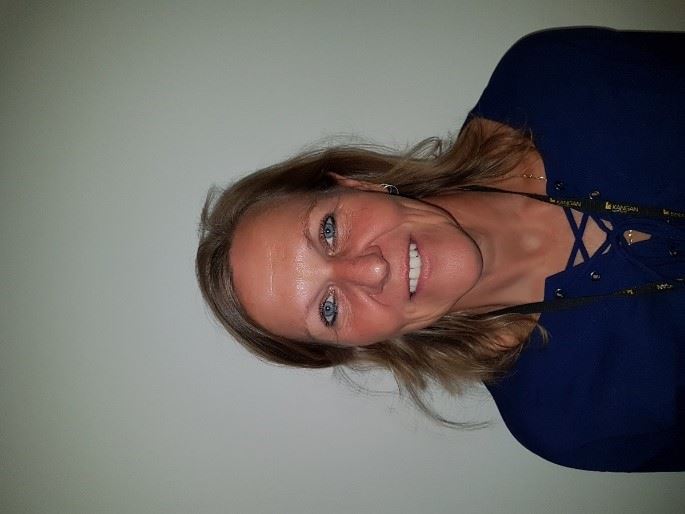
Ruth Patterson has been teaching numeracy across many VET areas with Melbourne Polytechnic for three years and previously worked at Kangan Institute and Victoria University teaching CGEA numeracy. She has a background in industrial Chemistry and the plastics/paint industry. She often includes her cats in zoom meetings.
----------------------------------------------------------------------------------------------------------------------------------------------
Rethinking LND: From Add-On to Embedded Practice Through Co-Teaching Monika Szuryn, RMIT
Conference Theme(s): Learn from where we've come from Session 4, 2:40- 3:25, Level 5, Room 5.33 |
Monika Szuryn |

Workshop Summary
This session explores the development and implementation of co-teaching guidelines at RMIT to support the embedded delivery of Literacy, Numeracy and Digital (LND) support within vocational education. It outlines the origins of the initiative, the collaborative process of drafting the guidelines, and the valuable input from LND specialists and teaching teams.
The presentation will highlight how the guidelines have supported clearer roles, stronger partnerships, and more consistent delivery practices, while also sharing key successes, challenges, and refinements identified through implementation.
Participants will also have the opportunity to engage in a practical activity to develop their own co-teaching guidelines that could be adapted for use within their LND and program teams.
Monika is the Program Coordinator for Literacy, Numeracy and Digital (LND) Support at RMIT’s College of Vocational Education. She leads the planning, allocation and delivery of LND support across priority programs, working with program teams and support services. Her work focuses on embedding LND through co-teaching, strengthening collaboration between LND specialists and vocational teachers, and improving student outcomes through contextualised support.
Monika has played a key role in evolving planning processes, communication, and service design, including earlier program engagement and clearer delivery models. She is passionate about positioning LND as an integrated practice that places student success at the centre.
----------------------------------------------------------------------------------------------------------------------------------------------
Practical strategies to attract participants to literacy programs Carol Holden, Here 2 Help Literacy & Numeracy Hub, TAFE NSW
Conference Theme(s): Embed adult learning principles across time Reimagine practice for changing learners and contexts
Session 4, 2:40- 3:25, Level 5, Room 5.26 |
Carol Holden |

Workshop Summary
Shame and previous negative experiences deter literacy learners who speak English as their first language from attending programs.
Carol Holden shares the practical strategies used at the literacy and numeracy hub: Here 2 Help that she runs in the Bega Valley NSW and links them to recent research commissioned by the Reading Writing Hotline.
Carol is a full-time permanent teacher of language, literacy and numeracy at TAFE NSW in Bega and Moruya and previously taught English at high school and reading to struggling primary school students. The experience of having a severely dyslexic child prompted her to undertake post-graduate qualifications in Special Education with a focus on learning difficulties.
In 2022 she founded Here 2 Help, a literacy and numeracy hub for adults that aims to reduce the barriers to education. It is a free drop-in centre with no-enrolments or assessments, using volunteer tutors to help participants achieve their self-identified goals. This collaboration between TAFE NSW and the Bega Library expanded to opening another hub at Tura in 2024 to provide connection, support and language tuition to a large group of new migrant families who recently moved to the area.